

logo
Bericht versturen
Thuis

Bloggen Ongeveer Threeroll Mills Boost Pigment Dispersion Efficiency

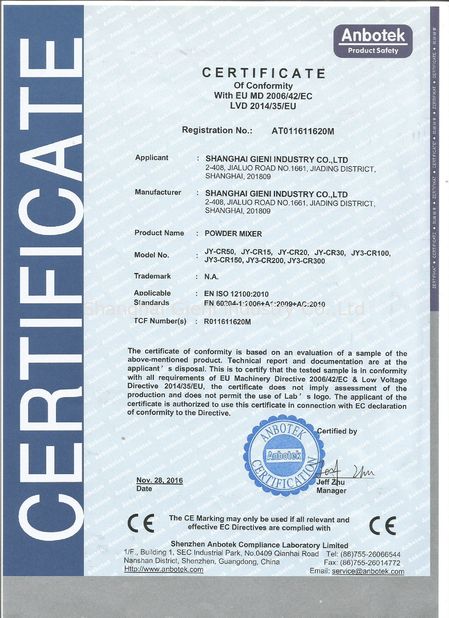
Certificaat
CHINA Shanghai Gieni Industry Co.,Ltd certificaten
Ik ben online Chatten Nu
Bedrijf Bloggen
Threeroll Mills Boost Pigment Dispersion Efficiency
Laatste bedrijfsnieuws over Threeroll Mills Boost Pigment Dispersion Efficiency

The precision of pigment dispersion is a critical factor determining the performance of downstream products such as coatings, inks, and plastics. While the traditional Three Roll Mill (TRM) has been a longstanding solution for this process, it increasingly faces challenges related to efficiency bottlenecks and inconsistent dispersion quality. This article examines the technical characteristics of TRMs in pigment dispersion, analyzes their operational limitations, and proposes data-driven optimization strategies to improve both productivity and product quality.

Technical Principles and Current Applications of TRMs

Three Roll Mills operate through three parallel rollers rotating at incrementally higher speeds, applying intense shear, compression, and friction forces to break down pigment agglomerates and achieve uniform dispersion. Despite their mechanical simplicity and operational familiarity in the pigment industry, TRMs reveal growing limitations as market demands evolve for tighter particle size distribution, dispersion stability, and production efficiency.

Critical Challenges: Balancing Efficiency and Dispersion Quality

  • Precision in Gap Adjustment: The roller gap spacing significantly impacts grinding effectiveness. Minor variations can substantially alter dispersion results. Traditional TRMs rely on manual gap adjustments, which lack precision and may drift during extended operation, compromising consistency.
  • Thermal Management and Material Degradation: High-speed roller rotation generates considerable heat. Inadequate cooling may degrade pigments or carriers, affecting product performance and color stability—particularly problematic for heat-sensitive pigments.
  • Production Capacity and Batch Consistency: TRMs have relatively small batch capacities, requiring multiple units or prolonged runs for large-scale production. Variations between batches due to operational differences or equipment wear further challenge quality control.
  • Cleaning and Maintenance: The mechanical design complicates thorough cleaning between different pigments or formulations, raising risks of cross-contamination that could affect product purity.

Data-Driven Optimization Approaches

To address these challenges, analytical approaches suggest several optimization pathways:

  • Automated Gap Control Systems: Implementing high-precision sensors and closed-loop control systems to monitor and adjust roller gaps in real-time. Predictive models correlating gap settings with dispersion metrics (particle size distribution, zeta potential) can ensure batch-to-batch consistency.
  • Enhanced Cooling Solutions: Redesigning internal roller cooling channels or implementing advanced external cooling systems to maintain optimal processing temperatures. Design of Experiments (DOE) methodologies can identify ideal temperature ranges to minimize material degradation.
  • Multivariate Process Optimization: Developing statistical or machine learning models that analyze interactions between key parameters (roller speed, gap width, residence time, feed rate) to predict dispersion outcomes and production efficiency, enabling operators to select optimal settings.
  • Real-Time Process Monitoring: Integrating inline analytical instruments (particle size analyzers, viscometers) for continuous quality tracking. Data analytics and anomaly detection can flag potential equipment issues or process deviations early, reducing waste.
  • Predictive Maintenance and Cleaning Protocols: Leveraging operational data (power consumption, vibration patterns) to forecast component wear and schedule preventive maintenance. Improved mechanical designs coupled with automated cleaning procedures can minimize downtime between production runs.

These data-centric strategies demonstrate significant potential to enhance the performance of Three Roll Mills in pigment dispersion applications, aligning with increasingly stringent industry requirements for both quality and throughput.

Bartijd : 2026-09-19 00:00:00 >> Bloglijst
Contactgegevens
Shanghai Gieni Industry Co.,Ltd

Contactpersoon: Mrs. Joan.WU

Tel.: 8613482060127

Direct Stuur uw aanvraag naar ons (0 / 3000)